

New Global Anti-Doping Rules Aim to Protect Young Athletes
The new WADA Code promises reform — but critics say the system still treats children like adults.

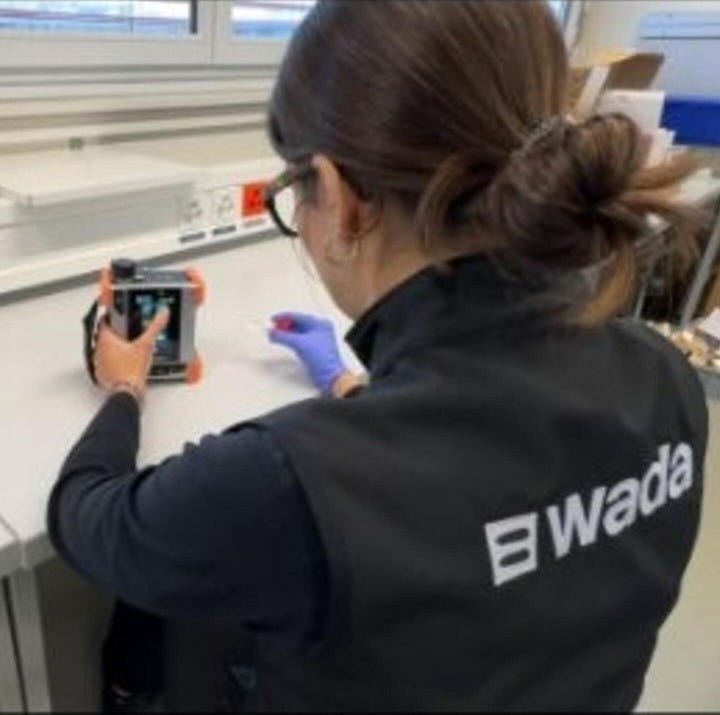
The 2026 Winter Olympics closed with no publicly announced positive doping cases and now sport’s anti-doping system is eager to signal progress.
Four years ago in Beijing, the 2022 Games were overshadowed by one of the most disturbing doping scandals in Olympic history: 15-year-old Russian figure skater Kamila Valieva’s positive test for a banned heart medication came to light during the games, igniting a global debate not just about cheating — but about how the system treats minors.
After a multi-stage consultation process launched in 2023, the World Anti-Doping Agency (WADA) says its newly finalized 2027 Code will better protect minors. The revisions, set to take effect January 1, 2027, include sweeping changes affecting young athletes — from eliminating parental consent for testing to increasing scrutiny of coaches and other adults around them.
But experts warn that behind the headlines, the reality may be far more complicated.
A system built for adults by adults
WADA was created in 1999 to harmonize anti-doping rules worldwide. At the time, elite sport was largely adult-dominated. Today, teenagers — and sometimes even younger athletes — compete on the biggest stages. Yet the regulatory framework is still catching up to that reality.
In 2024, WADA released a report called Operation Refuge, which identified 1,518 positive doping tests involving minors, across 1,416 young athletes worldwide since 2012. The most detected substances were diuretics/masking agents, stimulants and anabolic agents. The youngest athlete ever sanctioned under the system was just 12 years old.
Adjunct professor of sports law at the University of Toronto, Marcus Mazzucco, says those numbers highlight a reality anti-doping rules were never originally designed for:
“These rules are written by adults for adults,” he told Broken Ice. “And even though concerns have been raised about child athletes over the years… It almost falls on deaf ears.”
No Parental Consent Required for Testing
One of the most controversial changes involving minors in the 2027 Code removes the explicit requirement for parental consent or presence when minors undergo doping tests.
Under previous rules, parents or guardians were typically notified and allowed to supervise testing. That safeguard recognized the invasive nature of the process — which can involve blood draws or monitored urine collection.
Mazzucco says removing that requirement raises serious concerns.
“The doping control process itself is very invasive,” he explained. “Athletes who have to provide a bodily specimen…that’s kind of exposing yourself to the doping control official who’s an adult.”
Under many national laws, minors cannot legally consent to such procedures on their own. Previously, some anti-doping organizations even avoided testing children unless a parent could be present. Now, that safeguard disappears in the Code itself.
WADA’s rationale for the change is that anti-doping rules are “sport rules” accepted as a condition of participation — meaning consent is assumed when athletes compete.
Mazzucco calls the change “problematic” and notes that while some national anti-doping organizations raised “alarm bells” over the change because they do not want to get themselves in trouble under their own domestic laws, others expressed frustration with the need for parental consent during the consultation process because it makes testing more “administratively burdensome.”
“That kind of attitude just reflects that oftentimes there is a greater emphasis on detecting and deterring doping at all costs and not thinking about the rights violations that can be resulting from that,” Mazzucco stressed.
A Shift Toward Holding Adults Accountable
If the Valieva case in 2022 revealed anything, it was the imbalance of responsibility: a child faced years of scrutiny and punishment while the adults around her largely escaped consequences.
The 2027 Code attempts to address that by increasing obligations for Athlete Support Personnel (ASP) — a broad category that includes coaches, doctors, trainers, and even parents.
Under the new rules:
Anti-doping bodies must automatically investigate support personnel when a Minor or Protected Person they support commits an anti-doping rule violation
ASPs must undergo mandatory anti-doping education and provide accurate information to athletes they support
Minimum bans for complicit adults are increased from two years to four years
These changes acknowledge a reality experts say has long been overlooked.
“Children are not doping without adult complicity,” Mazzucco said. “Whether that’s a coach, a parent, a team doctor — someone is involved.”
Previously, only international federations and national anti-doping agencies were required to investigate support personnel. The new Code expands that obligation to include organizations like the International Olympic Committee (IOC) and major event organizers — theoretically closing accountability gaps.
But skepticism remains about whether investigations will be meaningful, especially when federations or governments may have incentives to protect successful programs.
Even in Valieva’s case, documented attempts to investigate adults “led nowhere,” Mazzucco noted, because systems often rely on the very organizations implicated in producing elite athletes.
“We’ll have to wait and see if these changes to the WADA Code improve the focus or attention on athlete support personnel so they can be held legally accountable” Mazzucco said.
While the Valieva case cannot be relitigated, Mazzucco believes her support personnel could still be investigated.
Expanded “Special Protections” for 16- and 17-Year-Olds
WADA has also broadened protections beyond the category known as “Protected Persons.”
Historically, that status applied to athletes under 16 — or under 18 if they were not in a Registered Testing Pool (RTP) and had not competed internationally, as well as to individuals lacking legal capacity. Elite 16- and 17-year-old athletes were often treated like adults despite still being minors.
The 2027 World Anti-Doping Code strengthens protections for young athletes, extending certain safeguards beyond the traditional “Protected Person” category. The revised Code also clarifies that mandatory public disclosure is not required for a Minor, Protected Person, or Recreational Athlete, and any optional disclosure must take the individual’s best interests into account.
On paper, this appears to recognize that teenagers competing at the highest level remain vulnerable. But Mazzucco cautions that the distinction between “protected” and “elite minor” athletes remains arbitrary.
WADA’s logic assumes internationally competing teens have received anti-doping education and therefore should be held to adult standards.
“That’s equating athletic experience with cognitive maturity,” he said, stressing that education does not guarantee a young athlete has the autonomy or understanding to resist pressure from powerful adults — a dynamic widely cited in the Russian system exposed by the Valieva scandal.
No Special Rules for Provisional Suspensions
Perhaps the most striking gap is what did not change.
Despite the controversy surrounding Valieva being provisionally suspended during the Olympics — then allowed to compete — the new Code introduces no special rules for provisional suspensions for minors.
In Beijing, the Court of Arbitration for Sport (CAS) allowed Valieva to compete after lifting her provisional suspension, concluding that applying the rule to a Protected Person could be disproportionate under the anti-doping Code.
Mazzucco expected WADA to clarify this issue. Instead, the rules remain largely the same.
That means young athletes could still face immediate bans before their cases are fully heard — potentially losing major competitions even if later cleared, which Mazzucco does not believe is the fair way to handle cases involving minors.
The Unanswered Question
Legal observers have described the 2027 Code as more evolutionary than revolutionary, balancing deterrence with athlete welfare.
But the fundamental tension remains: elite sport demands strict anti-doping enforcement, while child protection requires flexibility and care.
Mazzucco believes one promising development is increased incentives for young athletes to provide information about adult involvement — potentially exposing systemic abuse.
Such whistleblowing could trigger investigations into coaches or medical staff and reduce sanctions for the athlete, reframing them as victims rather than perpetrators.
Still, he cautions that real change may depend less on policy and more on whether organizations are willing to enforce it.
“Unless they’re forced by courts to change their practices, they may not,” he said.
The real test of the new Code lies ahead.