

Previously suspended judges make return to 2026 Olympic Games
A look at past judging scandals, and the system that allows suspended officials to officiate again.

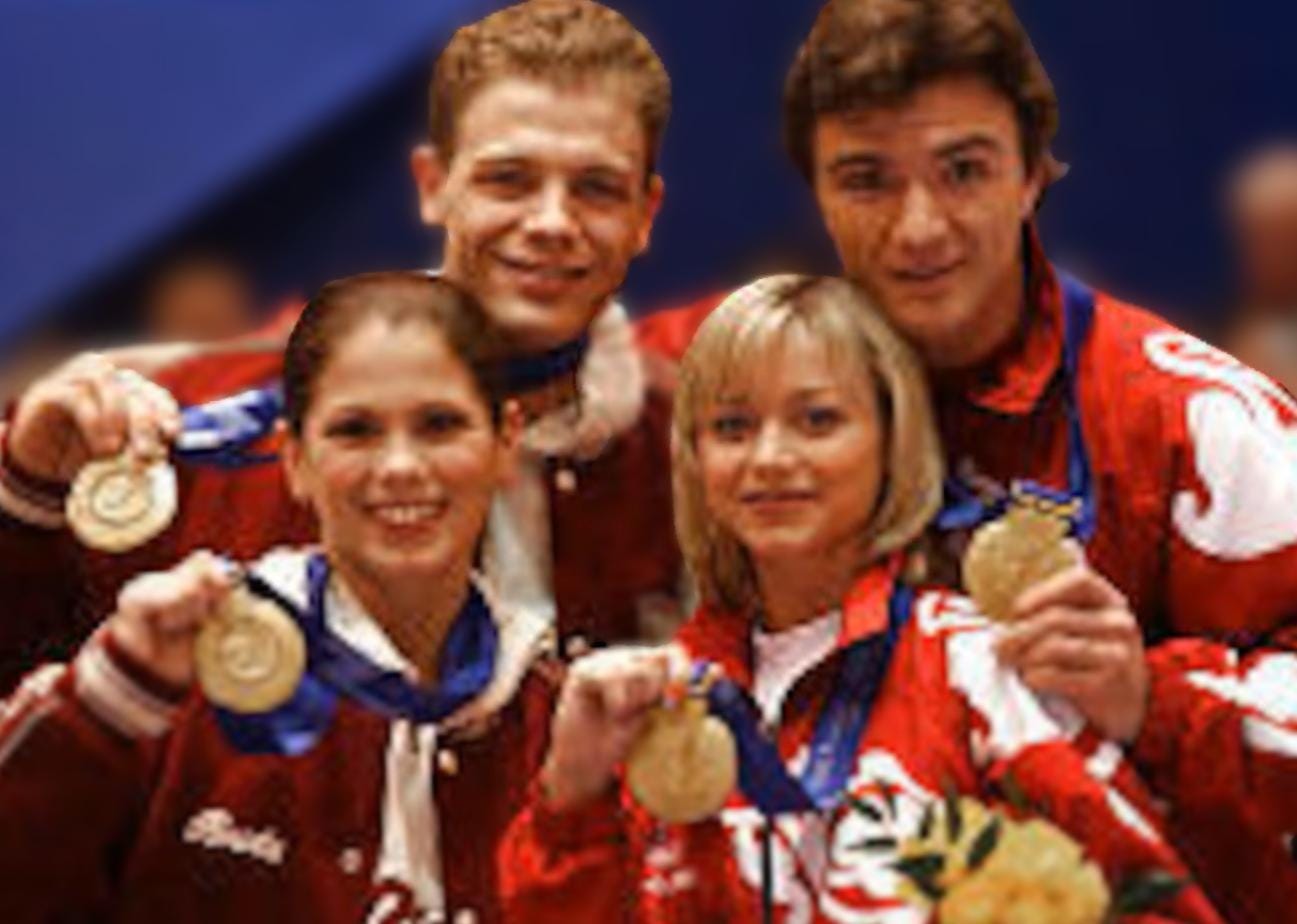
Figure skating has repeatedly confronted allegations of biased judging — and, in some cases, disciplinary action against officials themselves. While not every controversy results in sanctions, several judges have been suspended after investigations found evidence of favoritism, collusion, or improper conduct.
Under International Skating Union (ISU) rules, suspensions are typically time-limited rather than permanent. Once a disciplinary period ends, an official may apply to return to the judging pool, subject to eligibility requirements, re-certification, and nomination by their national federation.
In practice, this means that judges sanctioned for misconduct can — and sometimes do — officiate at ISU events again after serving their penalty.
Here is a look at some of the most well-known cases of figure skating judges being reprimanded including judges that were at the 2026 Milano-Cortina Olympics:
1999 & 2016 Russian Double Offender
At the 1999 World Figure Skating Championships in Helsinki, a Canadian television crew caught Russian judge Sviatoslav Babenko tapping his foot to signal his preferred placements in the pairs final to Ukrainian judge Alfred Korytek. The “toe-tapping” scandal, as it was coined, resulted in a three-year suspension that was later reduced to 18-months for Babenko. Koryteck was handed a two-year ban, later reduced to one year on appeal.
Babenko returned to judging and in 2016 was caught speaking loudly in Russian to another judge during an international event in Slovakia. Russian pair teams swept the podium at that event. Babenko was suspended for six-months. The other judge he had been talking to from Lithuania, Laimute Krauziene was reprimanded but not suspended.
1998 — Secret Recording Exposes Pre-Planned Placements
At the 1998 Winter Olympics in Nagano, Canadian ice dance judge Jean Senft secretly recorded a phone conversation with Ukrainian judge Yuri Balkov that appeared to show an attempt to predetermine results before the competition began. According to reports, Balkov proposed exchanging favorable scores between their respective national teams — a form of vote-trading long rumored in the sport. Senft said she had previously alerted officials but recorded the call after her concerns were ignored.
When the recording became public, the ISU sanctioned both judges. Balkov received a one-year suspension, while Senft — despite acting as a whistleblower — was suspended for six months for participating in the conversation.
Balkov returned to judging and served on panels at the 2002 Olympics and the women’s final at the 2014 Games, where Russia’s Adelina Sotnikova controversially won gold over reigning Olympic champion Yuna Kim of South Korea.
2002 — Salt Lake City Olympic Scandal
The pairs event at the Salt Lake City Games became one of the most infamous judging scandals in Olympic history. Following the pairs event, evidence emerged that judges colluded to favor the Russian team over Canada’s Jamie Salé and David Pelletier, who finished second.
French judge Marie-Reine Le Gougne admitted she had been pressured by her federation to vote for the Russian pair in exchange for favorable treatment for the French ice dance team later in the Games. Le Gougne and French Federation president Didier Gailhaguet were both suspended for three years and barred from judging at the 2006 Olympics.
Olympic officials awarded the Canadians a second gold medal and overhauled the judging system, replacing the 6.0 format with today’s Code of Points; a system that was meant to reduce subjectivity in the judging.
2018 — Olympic Judges Sanctioned for Favoritism
Two Chinese judges were investigated and suspended by the ISU for preferential scoring toward Chinese competitors at the 2018 Olympics. Chen Weiguang was suspended for two years and Huang Feng was banned for a year.
Feng was later appointed as a technical controller for the 2022 Beijing Winter Olympics pairs event and was on the panel for the Ice Dance final at the 2026 Olympics.
2021 — National Bias at World Championships
Following warnings from the ISU in 2020, Georgian judge Salome Chigogidze received a one-year suspension for scores deemed excessively favorable to Georgian skater Morisi Kvitelashvili at the 2021 World Championships. Officials concluded that the marks — particularly program components — demonstrated national bias.
Chigogidze was on the judging panel for the 2026 Winter Olympics.